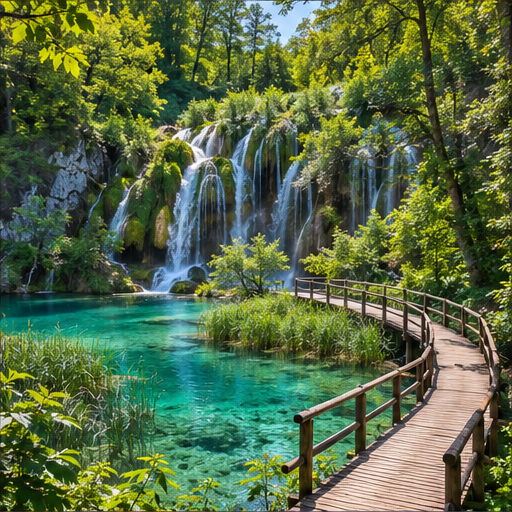
Plitvice Lakes is best understood as a connected water landscape rather than a single viewpoint. Lakes spill into one another through travertine barriers, and paths bring visitors close to cascades and wooded slopes.
The lakes are conventionally grouped as Upper and Lower Lakes, a distinction that helps with planning. The Upper Lakes form a longer sequence of water and forest; the Lower Lakes concentrate dramatic cliffs and waterfalls. Routes combine walking with park-operated transport or boat crossings. Use the park’s current guidance for your date rather than relying on an old route description.
Read the landscape before selecting a loop
Plitvice is a karst landscape where water moves across limestone and dolomite, depositing calcium carbonate that helps form travertine barriers. Those barriers shape cascades and linked lake basins. The scene is dynamic: water, vegetation and mineral structures interact over time. Staying on designated paths protects fragile edges and keeps visitors out of areas that are not open for access.
Decide whether your priority is a broad overview or a slower look at one section. A longer circuit can connect more of the lake system but asks for sustained walking and careful timing. A shorter visit around the Lower Lakes can still deliver a strong sense of the canyon, cliffs and waterfalls. Terrain, mobility, weather and onward travel all matter.
Build a route around energy and daylight
Start early enough to avoid turning every transition into a rush, especially when arriving from another region. Routes include boardwalks, paths and uneven surfaces; the day can feel longer than the map suggests. Leave a margin for overlooks and narrow sections where people may gather. Verify that a crossing or transport segment operates on your visit date.
Travelers who prefer a gentler day can choose a shorter path and treat the park as one landscape rather than an endurance challenge. Those who want a longer circuit should check walking demands in official park materials and avoid adding another major attraction afterward. The route itself is the main event.
Move with water, not against the crowd
Waterfalls draw people to the same viewpoints. At narrow boardwalks, a patient pace is safer and more pleasant than trying to overtake. Keep the path clear when stopping for a photograph, and do not step outside marked routes. Lake color shifts with light, depth and suspended minerals; give the scene time to change as clouds move or the sun reaches another part of the water.
Bring layers and footwear with reliable grip. Rain changes how wooden surfaces feel, while exposed portions can become warm in sun. Carry water and food according to your day plan and follow park rules for waste and wildlife. This is a protected place, not a constructed waterside promenade.
Where Plitvice belongs in a Croatia itinerary
The park fits as a dedicated stop between the coast and inland Croatia, but it is rarely a seamless add-on to a same-day beach plan. Travelers relying on public transport should confirm connections and consider an overnight stay if a return journey would compress the visit. By car, account for arrival and departure as well as walking time.
For a city contrast, read Split’s walking route; if the coast is next, the Zadar waterfront guide offers a northern Dalmatian perspective. Choose the direction that minimizes backtracking and leaves enough time to enjoy the landscape. A successful day ends with a memory of water moving through a forest, not a checklist.